
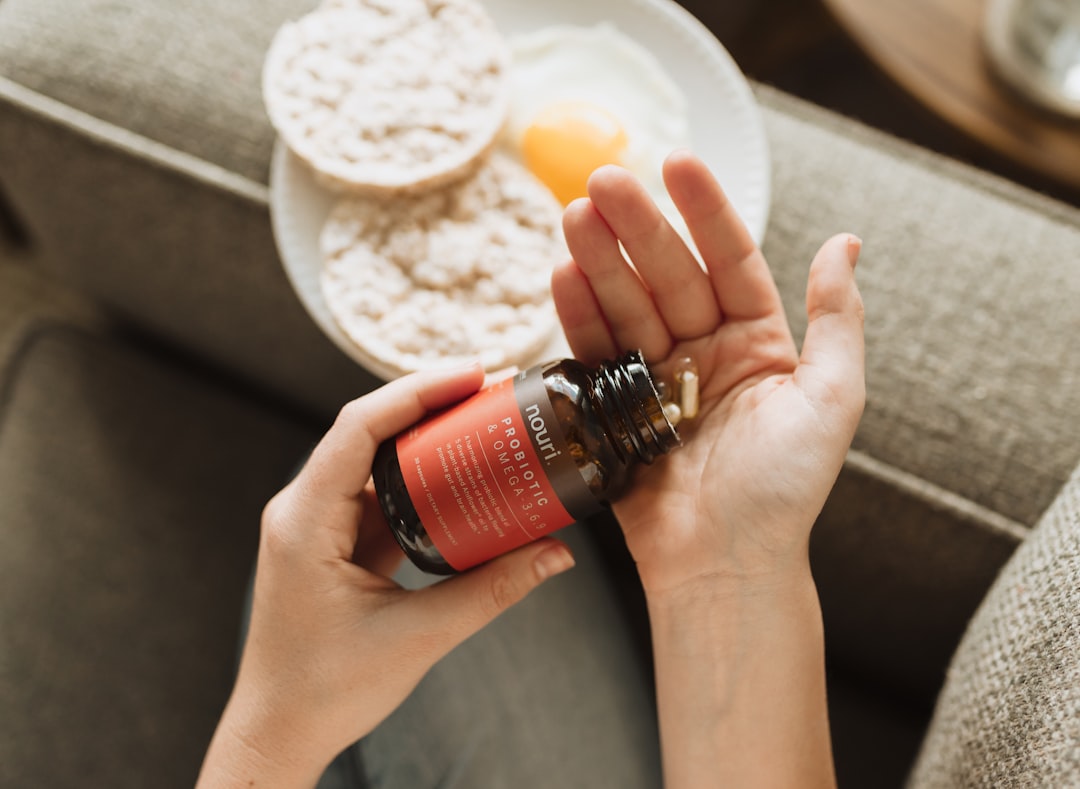
If you've started taking iron supplements for restless legs and still feel restless, jittery, or exhausted six weeks in, you're not imagining it. Swallowing a capsule and getting that mineral into your bloodstream are two very different things, and the gap between them has a name: bioavailability. It's the reason two people can take the exact same dose of the exact same iron supplements for iron deficiency and land in completely different places on a follow-up lab panel.
Bioavailability describes how much of a dose actually reaches your bloodstream in an active form, ready to do something useful. An injectable drug bypasses digestion almost entirely, so a much higher share of it reaches circulation. An oral supplement has to survive stomach acid, intestinal enzymes, competing nutrients, and a first pass through the liver before any of it counts. That's true whether we're talking about iron, creatine supplements for women building lean mass, or adaptogens marketed as supplements that reduce cortisol.
At Daydream Health Lab, we spend a lot of time explaining this gap to patients because it changes how you should think about dosing, timing, and expectations. We go into more depth on the testing side in our guide to iron absorption and iron deficiency testing beyond simple hemoglobin, which is worth reading if a standard blood panel hasn't explained your symptoms.
What Is Bioavailability, Exactly?
Bioavailability is the fraction of an administered dose that reaches systemic circulation unchanged and able to act on the body. An intravenous drug is the reference point, essentially 100 percent bioavailable, because it's placed directly into the bloodstream. Everything else, oral tablets, capsules, liquids, gets compared against that benchmark. The National Institutes of Health describes bioavailability as one of the central concepts in clinical pharmacokinetics, because it determines how much of a prescribed or supplemental dose ever becomes available to do its job.
This isn't an abstract academic distinction. It's the reason a 65 mg oral iron tablet might raise your ferritin only modestly, while a much smaller intravenous iron dose can move the needle fast. The oral route has to survive a gauntlet the injectable route skips entirely.
Is Bioavailability the Same as Absorption?
No. Absorption is only the first step, how much of a substance crosses the gut wall into the bloodstream. Bioavailability accounts for absorption plus everything that happens afterward, including liver metabolism before the substance ever reaches general circulation. A supplement can be well absorbed and still have low bioavailability if the liver breaks down most of it before it circulates.
Think of absorption as getting through the front door and bioavailability as actually making it to the meeting. A drug or mineral can clear the intestinal wall just fine and still lose a significant percentage of its dose to what's called first-pass metabolism, where the liver processes and deactivates part of the substance before it ever reaches your tissues.
How Oral Supplements Travel Through Your Body
When you swallow an iron tablet, it has to dissolve, survive stomach acid, get absorbed by specialized transporters in the small intestine, and then pass through the liver before it reaches the rest of your body. Each stage is a place where the dose can shrink. Food, other minerals, certain medications, and even the time of day can all interfere with that process.

Why Do Oral Drugs Have Low Bioavailability?
Oral drugs and supplements have low bioavailability mainly because of first-pass liver metabolism, incomplete intestinal absorption, and breakdown by stomach acid or digestive enzymes before the substance ever reaches the bloodstream. Some compounds lose more than half their dose this way, which is why oral and injectable versions of the same medication rarely use identical dosing.
Iron is a textbook case. Your intestines regulate iron absorption through a hormone called hepcidin, which rises when your body senses it already has enough iron on board, or when inflammation is present. That regulatory step alone can cut absorption dramatically, independent of how much iron is in the capsule. A study published through the National Library of Medicine found that alternate-day dosing improved fractional iron absorption compared with daily dosing, precisely because it works with, rather than against, that hepcidin response.
"Oral bioavailability is influenced by dissolution, permeability, and first-pass metabolism, and can vary substantially between individuals taking the identical formulation."
What Route of Drug Absorption Has the Greatest Bioavailability?
Intravenous administration has the greatest bioavailability, at or near 100 percent, because it delivers the substance directly into the bloodstream and skips digestion and first-pass liver metabolism entirely. Intramuscular and subcutaneous injections come next, followed by oral, which is typically the least predictable and often the lowest.
That's precisely why some patients with low ferritin who don't respond to oral iron supplements for low ferritin end up moving to an infusion. It isn't that oral iron failed as a concept, it's that the oral route has a structural ceiling that IV administration doesn't share. We cover how this variability shows up on lab panels in our piece on pharmacogenomics testing and how your DNA affects medication response, since genetics also shape how efficiently people process oral doses.
What Makes a Supplement More Bioavailable?
A supplement becomes more bioavailable through its chemical form, how it's paired with other nutrients, and how it's timed relative to food and competing minerals. Chelated iron forms, for instance, tend to be gentler on the gut and more consistently absorbed than ferrous sulfate for some people, while others tolerate the cheaper form just fine.
Formulation matters well beyond iron. Creatine monohydrate remains the most researched and most bioavailable form on the market, which is worth knowing if you're comparing creatine supplements for women against pricier "advanced" versions that haven't shown a clear absorption advantage in controlled research. The same logic applies to supplements that reduce cortisol, like ashwagandha, where standardized extract concentration affects how much active compound you're actually getting per dose, not just the milligrams printed on the label.
Here's what tends to move the needle on bioavailability across most oral supplements:
- Taking iron on an empty stomach when tolerated, since food can reduce absorption
- Pairing iron with vitamin C, which supports non-heme iron uptake
- Separating iron from calcium, coffee, and tea by a couple of hours
- Choosing a chelated or bisglycinate form if ferrous sulfate causes GI upset
- Checking for standardized extract percentages on botanical supplements
- Reviewing third-party testing to confirm labeled potency matches actual content
- Asking whether alternate-day dosing fits your specific ferritin pattern
Label claims and lab-verified content don't always match, which is a bigger factor in real-world bioavailability than most people realize. Our guide to supplement purity and potency testing and what to look for in products walks through how to check that before you assume a supplement itself is the problem.
When Oral Absorption Isn't Enough: Alternatives and Exceptions
Oral iron works well for a lot of people, and it's still the reasonable first step for most cases of mild to moderate deficiency. But it isn't universal. People with inflammatory bowel disease, those who've had gastric bypass surgery, and patients with persistently elevated hepcidin often see limited results no matter how well they dose or time their supplements. In those situations, intravenous iron isn't a last resort, it's the medically appropriate choice.
"Iron deficiency is a common, treatable cause of restless legs syndrome, and correcting low ferritin levels can improve symptoms in many patients."
We'd also point out that oral iron isn't always the whole answer even when it's working. Some medications, including certain proton pump inhibitors and thyroid prescriptions, interfere with iron absorption or are themselves affected by iron when taken too close together. We break this down further in our article on how medications interact and what laboratory research shows, which is a useful read before you stack a new supplement onto an existing prescription list.
What to Expect: A Realistic Timeline
Ferritin doesn't move overnight, and neither do restless legs symptoms in most cases. With consistent oral dosing and reasonably good absorption, expect measurable changes in ferritin around 6 to 8 weeks, with RLS symptom improvement often lagging a bit behind the lab numbers. Full repletion for someone starting from significantly low ferritin can take three to six months of steady supplementation.
That timeline shifts, sometimes dramatically, based on the bioavailability factors we've covered. In our practice we have seen patients with well-timed, well-formulated dosing hit meaningful ferritin gains in half that window, and others plateau early because of an absorption issue nobody had tested for yet.
Practical Tips for Getting More From Oral Supplements
- Retest ferritin and hemoglobin 8 to 12 weeks after starting, not sooner
- Try alternate-day dosing if daily dosing hasn't moved your numbers
- Log symptoms alongside labs, since RLS relief can trail ferritin gains
- Confirm your supplement's actual potency through third-party testing
- Talk to your provider before combining iron with thyroid or reflux medications
- Ask about IV iron if oral dosing stalls after two consistent cycles
None of this requires guessing. Precise analysis of your baseline ferritin, hemoglobin, and inflammatory markers gives you a research-backed starting point instead of a trial-and-error one, and it's the difference between adjusting a supplement plan with evidence and just hoping the next bottle works better than the last.
Low bioavailability isn't a flaw in your body or a sign you're doing something wrong. It's simply how oral dosing works, and understanding it is what lets you make smarter choices about form, timing, and when it's time to talk to your provider about other routes of administration. As Eric Obrien puts it in our ongoing coverage of pharmaceutical research here at Daydream Health Lab, the goal isn't to chase the trendiest supplement format, it's to understand what your specific body actually absorbs. If you've been taking iron supplements for months without answers, a controlled lab evaluation is usually a faster path forward than switching brands again.